

Beyond the Naked Eye: Dermoscopy in Practice Course
A free, on-demand, case-based course led by board-certified dermatologist Dr. Ilya Mukovozov, designed to help you tell a harmless lesion from a possible skin cancer, and know when to monitor and when to refer.
Trusted by clinicians across Canada and the United States
Earn 3.0 ANCC contact hours
NP Circle is accredited as a provider of nursing continuing professional development by the American Nurses Credentialing Center’s Commission on Accreditation.
Why take this course?
In primary care, telling a harmless mole from a possible skin cancer is a critical, life-saving skill. The naked eye has its limits. Dermoscopy bridges that gap, bringing out the subtle red flag patterns that often go unnoticed, so you can decide with confidence when to monitor a lesion and when a patient needs an urgent referral.
First offered as a live NP Circle workshop on September 10, 2026, this course is now available on demand. Dr. Mukovozov starts with how a dermatoscope works and builds a clear, step-by-step approach, the two-step algorithm, then applies it to the lesions you see every day: benign nevi, seborrheic keratoses, vascular lesions, dermatofibromas, basal and squamous cell carcinomas, actinic keratoses, lentigines and melanoma, so you can put what you learn into practice in clinic the very next day.
What you will be able to do
Describe the basic functions of a dermatoscope, including when to use polarized versus non-polarized light.
Outline a foundational, step-by-step triage algorithm to categorize skin lesions as benign or suspicious.
Recognize the classic dermoscopic red flag patterns associated with early-stage skin cancers.
Identify key dermoscopic features that distinguish common benign lesions from their malignant mimics.
Define clear, evidence-based criteria for deciding when to monitor a lesion in primary care and when to refer to a specialist.
Meet your instructor
-
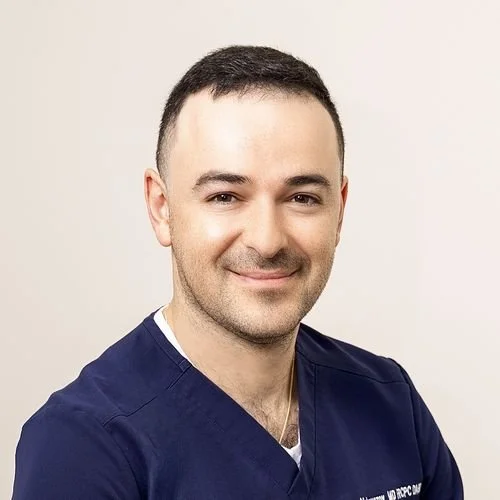
Dr. Ilya Mukovozov, MD, PhD, FRCPC
Instructor
Board-certified Dermatologist, Toronto, OntarioDr. Ilya Mukovozov is a Canadian board-certified dermatologist with interests in medical dermatology, skin cancer surveillance and cosmetic dermatology. He completed his Honours Bachelor of Health Sciences at McMaster University, followed by MSc and combined MD/PhD training at the University of Toronto, and his Dermatology Residency at the University of British Columbia.
Dr. Mukovozov is a Lecturer in the Department of Medicine, Division of Dermatology at the University of Toronto and a Clinical Associate in the Division of Dermatology at Women’s College Hospital. He is actively involved in dermatology research and education, with over 100 peer-reviewed publications and presentations at national and international conferences. He is a Fellow of the Royal College of Physicians and Surgeons of Canada, a member of the Canadian Dermatology Association, and is passionate about teaching practical dermatology and dermoscopy.
Course outline
-
Dermoscopy Basics
Part 1
How dermoscopy works, polarized and non-polarized light and when to use each, why dermoscopy matters in primary care, and an introduction to mole mapping and digital monitoring.
-
Pattern Analysis and Variations
Part 2
The structured approaches to a pigmented lesion: pattern analysis, the ABCD rule of dermoscopy, the 7-point checklist, the Menzies method and the 3-point checklist, with knowledge checks.
-
The Two-Step Algorithm
Part 3
Step 1 of the algorithm: deciding whether a lesion is melanocytic or non-melanocytic, the foundation for every lesion you assess.
-
Dermoscopic Criteria
Part 4
The features that define common lesions and their mimics: benign nevus and pigment network patterns, acral lesions and the furrow ink test, intradermal nevi, seborrheic keratosis, angiomas, dermatofibroma, sebaceous hyperplasia, basal cell carcinoma, actinic keratosis, squamous cell carcinoma and lentigo.
-
Nevus or Melanoma?
Parts 5 and 6
Step 2 of the algorithm: telling a benign nevus from melanoma, and the melanoma-specific structures that should prompt a referral.
-
Dermoscopy in Skin of Colour
Part 7
Pearls for darker skin types, including skin type related nevus patterns, longitudinal melanonychia and benign melanocyte activation.
-
Choosing a Dermatoscope
Part 8
What to look for when buying a dermatoscope, and Dr. Mukovozov’s top 3 picks for best overall, best optics and best value.
-
Putting It All Together
Questions and cases
5 cases to practise the two-step algorithm and the 7-point checklist, plus answers to the questions NPs asked during the live workshop.
How does it work?
Enroll free, then learn at your own pace on the NP Circle platform.
On demand: 11 short lessons, about 3 hours in total, on your computer or in the NP Circle app. Pick up where you left off.
Real cases: Every part is taught through real dermoscopic images, with knowledge checks along the way and 5 cases to practise on at the end.
Live Q&A included: 40 minutes of the questions NPs asked during the live workshop, with practical answers.
Who should take this course?
This course is designed for NPs in primary care, urgent care and other settings who assess skin lesions and want a confident, structured approach to dermoscopy.
Family physicians, physician assistants, registered nurses, pharmacists and other healthcare professionals are also welcome.
No dermoscopy experience is needed.
Testimonials
-
![Headshot of Danielle Marston]()
“There’s something truly special about a community of NPs who share a similar background and clinical experience, and a genuine passion for exceptional patient care. NP Circle is exactly that! I joined for the Menopause Management Course while preparing for the MSCP exam. Compared with other recommended materials, I found it much more practical and user-friendly, while still covering everything I needed for the exam. The evidence-based content, algorithms and real-world clinical guidance made everything come together. I felt well prepared, and I’m thrilled to say I passed! The course also left me more confident caring for patients in practice. I highly recommend it to any clinician looking to strengthen their menopause knowledge. Thank you to the entire NP Circle team!”
Danielle Marston, FNP-C, CLC, MSCP
Nurse Practitioner, CO -
![Headshot of Marie Loughnane]()
“This platform has been a great place to connect with other NPs, share insights and engage in continuing education opportunities geared to support NPs in their practice. I'm so glad I decided to become a part of this community. For the first time in my NP career I feel like I have a community and an amazing support network at my fingertips. The Lab Interpretation and Menopause Management courses along with the frequent webinar offerings on varied topics, and real world case discussions others bring to the forum make it easy to keep current and upgrade your knowledge. Thank you for creating this space!”
Marie Loughnane, MN, NP- Adult, MSCP
Nurse Practitioner - ON -
![Barb Hood]()
“I am a semi-retired NP providing care to remote communities. Even after 25 years in practice and decades of women’s health conferences, I still find menopause care challenging to navigate at times. The Menopause Management Course has been the perfect enhancement to my knowledge. The content is highly curated, evidence-based, and well organized, with helpful PDFs and charts for each module. The self-paced format with built-in repetition makes it easy to retain key concepts. Concepts like SERMs, TSECs, and KNDy neurons finally clicked once I heard Aliya explain them. Aliya’s gentle voice provides a warm and humble backdrop, and you can feel the respect she has for women, the content, and the learner. Kudos to Aliya, Claudia, and their team. This is most certainly the best course I have ever taken, and I have enough certificates to paper a wall.”
Barb Hood, BScN, NP-PHC
Nurse Practitioner - ON, NWT -
![Kathy Rukavina]()
"I’m so grateful for NP Circle. This platform has given me the opportunity not only to connect with nurse practitioners across the country, but also to access high-quality, accessible online educational opportunities. The Menopause Management Course was excellent, offering practical, evidence-based tools that I will be able to utilize in my practice when caring for women during this life transition. I look forward to the upcoming Primary Care Review Course. Thank you to Aliya and the NP Circle team for building this great platform together!"
Kathy Rukavina, MN, ANP, NP(F)
Nurse Practitioner - AB -
![Poonam Sehgal]()
“The education is excellent. As an NP, I appreciate how practical and clinically focused the Menopause Management Course is. Menopause is an area of women’s health that is often overlooked in traditional training, yet it has a significant impact on patients’ quality of life. This course provides clear, evidence-informed guidance that will meaningfully improve how NPs assess, educate, and support women through this transition.”
Poonam Sehgal, MScN, NP-PHC
Nurse Practitioner - ON -
![Brooke Wagner]()
“NP Circle creates the best educational opportunities I’ve come across in my NP career thus far. Hearing from the industry’s top specialists about tips and tricks on how we can manage many illnesses and conditions that we often refer for in primary care is motivating, empowering and can significantly reduce the volume of referrals sent and wait times for patients.”
Brooke Wagner, MN, NP-PHC
Nurse Practitioner - ON -
![Meagan Beavers]()
“NP Circle is an incredible platform for the busy NP. Not only are their multiple course offerings, but there is a plethora of valuable resources at one's fingertips - including the valuable input from other NP's. Having taken multiple courses from a wide variety of platforms, I can attest that NP Circle is absolutely the best platform out there in regards to content and value for money. The NP Circle Lab Interpretation Course is by far the most valuable course I have ever taken.”
Meagan Beavers, MSN, RN, BA, FNP-C, CEN
Nurse Practitioner - CA, ON -
![Headshot of Claire Smith]()
“Could not be happier with my decision to attend the Primary Care Expert Series. For less than $20 per session, you get evidence-based and relevant clinical tools from medical specialists. The majority of the sessions are held after a standard work day and recorded for later viewing as well, which is super convenient. After attending each session, I take away valuable knowledge that will enhance the care that I provide my patients.”
Claire Smith, MN, NP-PHC
Nurse Practitioner - ON -
![Kelsey MacNeil]()
“This is a wonderful platform. I actually left primary care about a year ago because I was a new grad and felt so overwhelmed by all the knowledge gaps I had. But since I’ve been watching all of these webinars and doing my own studying to fill in my learning gaps, I went back to primary care a couple of months ago. I’m sure you know this, but you are making such a massive difference for NPs!”
Kelsey MacNeil, MN, NP-PHC
Nurse Practitioner - ON -
![Kim Harkness]()
"NP Circle’s Lab Interpretation Course is an amazing resource for both new and seasoned NPs. It’s self-paced with lifetime access and is conveniently delivered in short sections that can be completed at any time as schedules allow. The hard work put into the development of this course is evidenced by the comprehensive content and expert review. This is an outstanding and much needed resource for all NPs contributing to a gap in NP education. Thank you NP Circle!"
Kimberly Harkness, MN, NP-PHC, NP-Adult, GNC(C)
Nurse Practitioner - ON -
![Headshot of Lori Wistling]()
“The NP Circle Menopause Management Course opened up so much information and understanding for me regarding the transition for women and how to better treat them. The course was laid out in such a way that each module built on the prior ones which provided a deeper understanding and solidification of knowledge. I feel more prepared to take the Menopause Society Certification Exam after completion of this course. Highly recommend this course!”
Lori Wistling, APRN, FNP-BC, FNP-C
Nurse Practitioner - FL -
![Marianne Leblond]()
"As a new graduate, NP Circle has been a life changer for me. I feel extremely empowered by the community, the trainings, and the knowledge I’ve gained so far. The Lab Interpretation Course has made a huge difference in my confidence and was exactly what I needed. I love the short videos, how the course is divided, and how clear and easy everything is to understand. It’s already changing my day-to-day practice!"
Marianne Leblond, MN, IPSPL
Nurse Practitioner - QC -
![Headshot of Antoinette Riley]()
“After completing the Menopause Management Course this past weekend, I was able to immediately apply what I learned in my primary care practice. Just yesterday, I used the principles from the course with 4 different patients at 4 different stages of menopause! I felt confident asking pertinent questions, discussing expectations, and even adjusting hormone therapy routes when requested. As an experienced provider, this felt like a true WIN-WIN! I was able to expand my knowledge while guiding my patients toward the best course of treatment for their lives. I highly recommend NP Circle’s Menopause Management Course!”
Antoinette Riley, DNP, FNP-BC, DCNP
Nurse Practitioner - TX -
![Kristin Carey]()
“As an experienced nurse practitioner, I found this lab interpretation course to be both refreshing and incredibly valuable. The content is concise yet comprehensive, covering everything from basic panels to more complex diagnostics in a clinically relevant way. It’s clear the course was designed with real-world application in mind, bridging the gap between textbook knowledge and what we actually see in practice. Whether you’re newly licensed or have years under your belt, this course sharpens your diagnostic skills and boosts confidence in managing complex lab results. Highly recommend for anyone looking to elevate their clinical acumen.”
Kristen Carey, MN, NP(F)
Nurse Practitioner - SK, BC -
![Andrea Mayne]()
"I am so incredibly grateful and happy that NP Circle exists! I’ve always felt that NPs haven’t previously had structured and high quality resources available to help foster continuing education after graduation, and NP Circle has really superseded my expectations. Every course I’ve taken has left me with a wealth of invaluable and practical knowledge, and the platform is full of high-quality and practical resources! I also love the questions and answers that NPs across the country are able to contribute to. It’s such a helpful learning resource. I can’t thank Aliya enough for creating this space for all of us!"
Andrea Mayne, MN, AGPCNP
Nurse Practitioner - ON -
![Headshot of Alexandra Milne]()
“These are the most important education sessions you can attend as a nurse practitioner in primary health care. You leave with tangible tools to better serve your patients and minimize unnecessary referrals and long specialist wait times. Sessions are organized with sufficient time for questions and some specialist even provide post-session written materials.”
Alexandra Milne, MN, NP-PHC
Nurse Practitioner - ON -
![Headshot of Claudia Mariano]()
"As a recently retired NP, I have experienced firsthand the diverse facets of our profession, from clinical expertise and advocacy, to leadership , scholarship, and research. Now more than ever, it's crucial to be part of a supportive community of like-minded NPs. Being connected in this way empowers us to grow both individually and collectively, enhancing our ability to elevate patient care to new heights."
Claudia Mariano, MSc, PHCNP
Retired Nurse Practitioner - ON -
![Headshot of Christine Pirwitz]()
“My experience working with Claudia at NP Circle was incredibly positive. She provided thoughtful guidance, practical career insight, and a supportive approach during a time when I was navigating several major professional decisions, including a significant cross-border move and career transition. Her coaching helped me gain clarity, confidence, and a better understanding of the direction I wanted to move in professionally. Claudia was also exceptionally responsive, approachable, and genuinely invested throughout the process. I always felt supported and able to reach out with concerns. I truly appreciated her encouragement, perspective and ability to tailor the process to my individual goals and circumstances. Thank you, Claudia, for your guidance and support throughout this process.”
Christine Pirwitz, NP
Nurse Practitioner - BC -
![Headshot of Bri Smith]()
“I’m so happy this exists! I would highly recommend these events to any primary care provider who is looking to gain knowledge from some of the best specialists and improve their everyday practice. I’ve already been able to implement some of the knowledge I gained from the first session into my practice and prevent an unnecessary referral! 5/5 stars”
Bri Smith, MN, NP-PHC
Nurse Practitioner - ON -
![Headshot of Helen Nicolle]()
"I’m loving being a part of NP Circle! The programs are taught by NPs, MDs, and others who are the best in their field. I’ve had so many great takeaways for my practice. All the resources I need for practice are easily accessible. It’s also been nice to receive updates on relevant news to NP practice and to learn from difficult cases posted by other NPs. Any questions I have related to daily practice or career advancement I can post on there and someone always has helpful advice/information. All in all it’s a great one stop shop for all my NP needs!"
Helen Nicolle, MN, NP
Nurse Practitioner - ON, NB





FAQs
-
Yes. The course is free, including the contact hours and the certificate. You only need an NP Circle account, and joining NP Circle is also free.
-
No. This course was first offered as a live workshop and is now available on demand, so you can start anytime and learn at your own pace. The recording has been organized into short lessons, and the live Q&A is included.
-
Yes. NP Circle is accredited as a provider of nursing continuing professional development by the American Nurses Credentialing Center’s Commission on Accreditation.
This course is designated for 3.0 ANCC contact hours, available until September 17, 2029. ANCC contact hours are accepted by the AANP Certification Board for NP recertification.
-
Complete all lessons and the post-activity evaluation. We recommend completing the evaluation within 48 hours of finishing the course. You can then request your certificate here.
-
No. You can take the full course without one. If you are thinking about buying a dermatoscope, Part 8 covers what to look for and Dr. Mukovozov’s top picks.
-
No. Although the course is designed with NPs and primary care clinicians in mind, it is open to physicians, physician assistants, registered nurses, pharmacists and other healthcare professionals who assess skin lesions.
-
NP Circle is founded and led by NPs. Our team plans, reviews and moderates every program, with needs assessments guiding the topics we cover and the clinical questions we address.
We bring together expert NPs, physicians, pharmacists and other specialists so learners can benefit from the depth of knowledge and clinical experience across disciplines. Faculty are selected for their topic expertise, teaching ability and the practical value they bring to NP practice.
Interested in teaching with us? Apply here.
-
Dr. Ilya Mukovozov has disclosed relevant financial relationships within the past 24 months with AbbVie (advisory board, speaker), Amgen (speaker), Arcutis (advisory board, consultant), CeraVe (consultant), Cliniderm (advisory board), Galderma (consultant, speaker), Kenvue (advisory board), L’Oréal (consultant, advisory board), NAOS (consultant), Novartis (speaker, consultant), Pfizer (advisory board, consultant, speaker), Sun Pharmaceuticals (advisory board, speaker) and UCB (consultant, advisory board). All relevant financial relationships have been mitigated.
All other individuals in a position to control the content of this educational activity have no relevant financial relationships with ineligible companies to disclose. This activity has not received any commercial support.
Start learning today
Free
On demand • 3.0 ANCC contact hours
NP Circle members: go straight to the course
NPs and NP students who aren’t members yet: click Enroll free and fill out the form
Other healthcare professionals: click Enroll free and fill out the form